

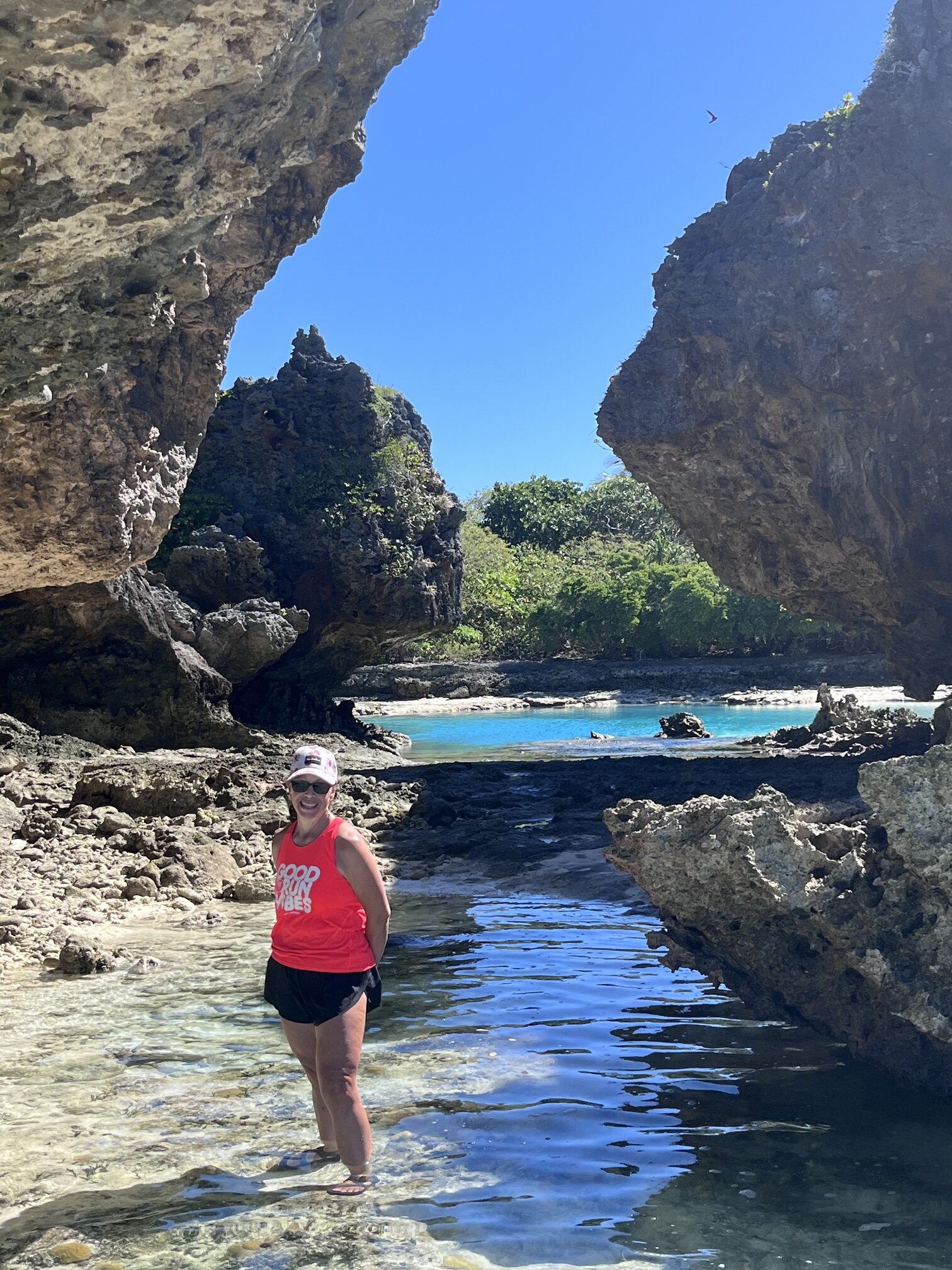
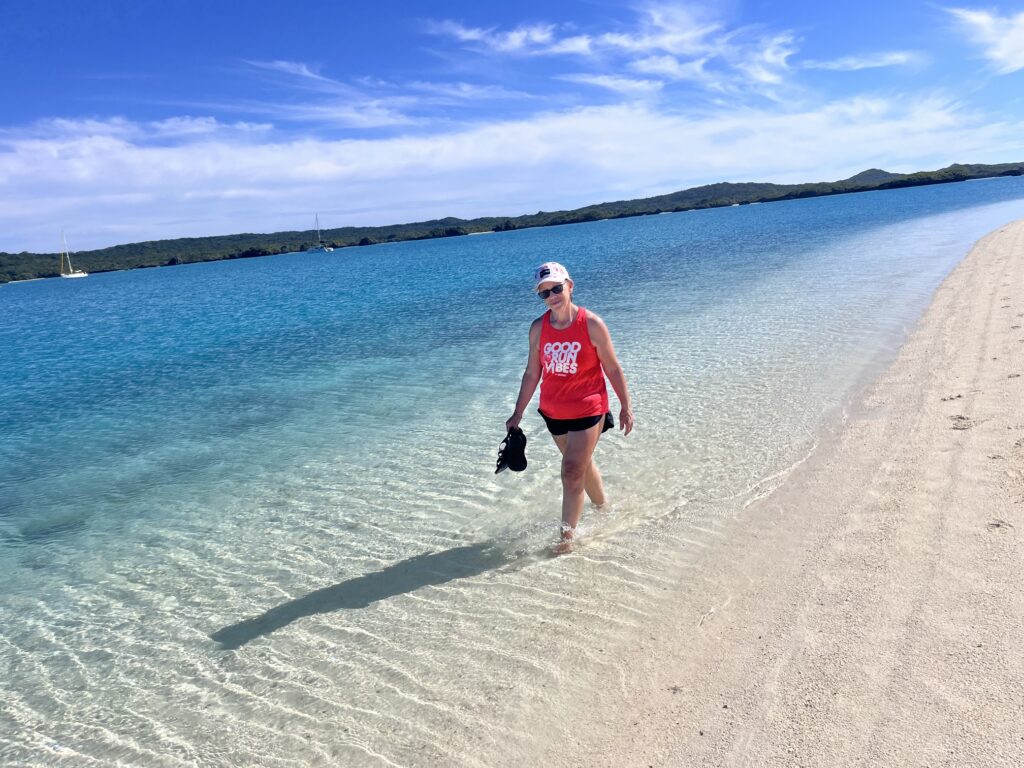
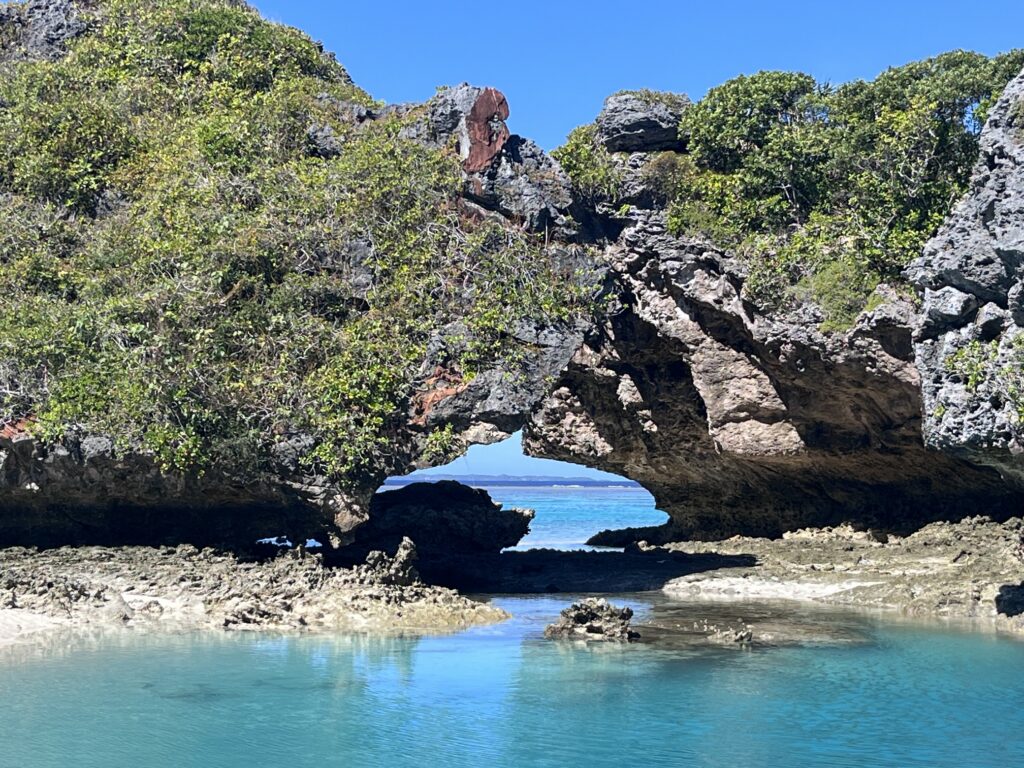
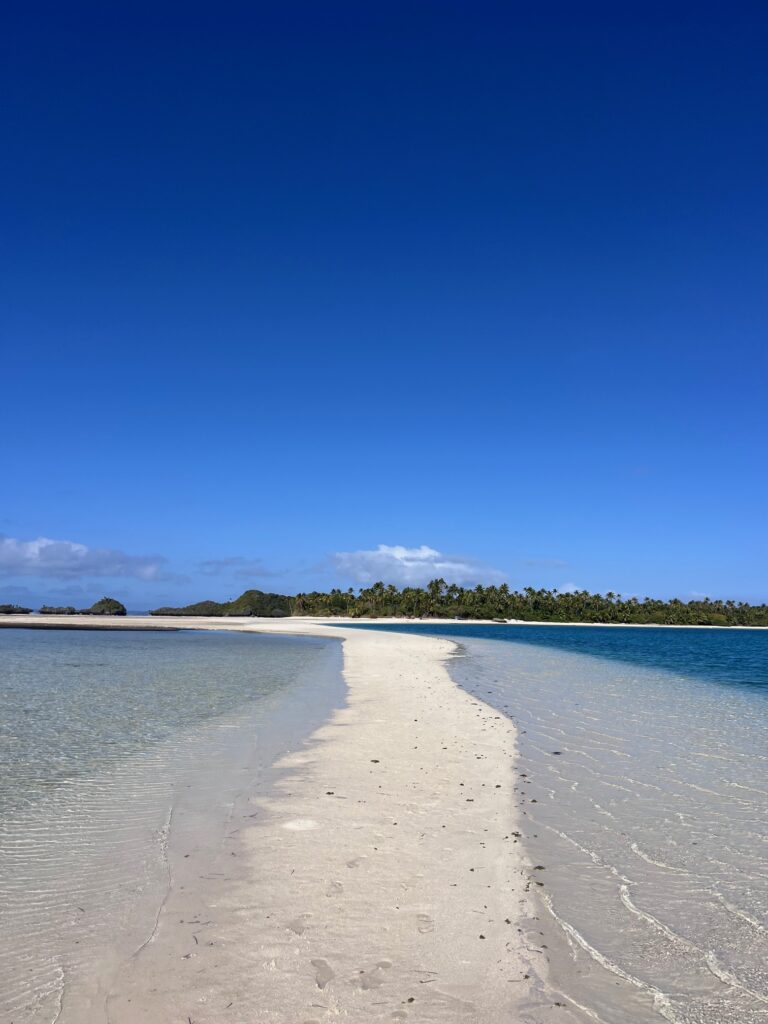
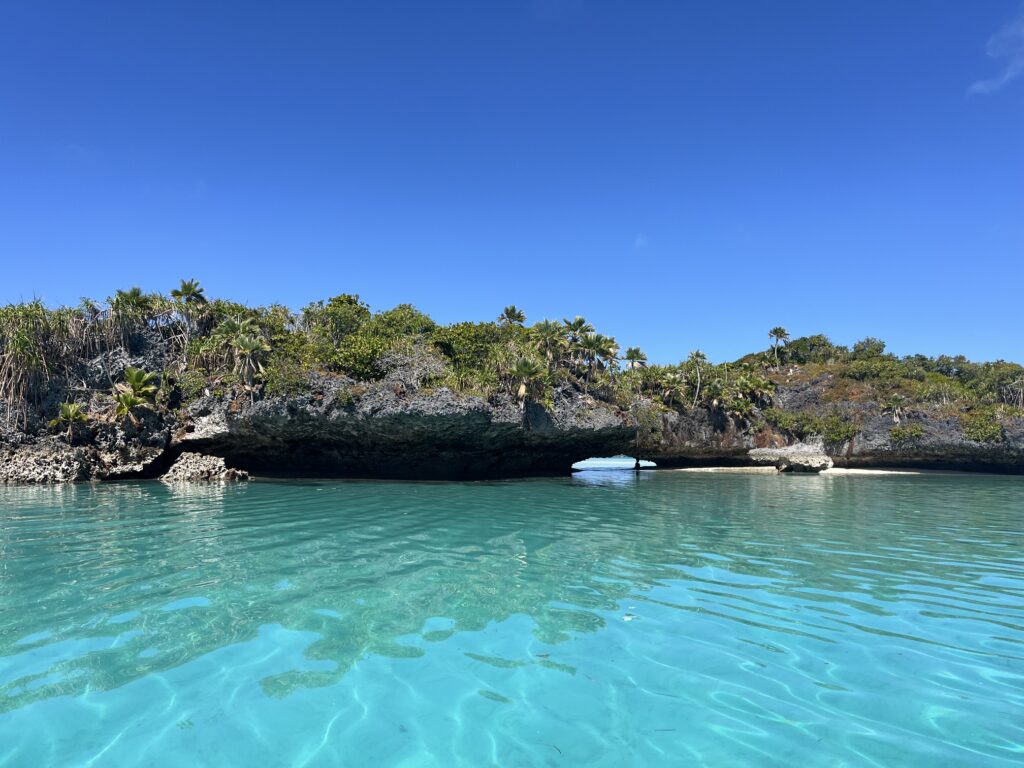
New spot this week: Fulaga. Fulaga is the southernmost island in the Lau Island Group. And extremely remote. That remoteness, however, does not mean cruising boats don’t stop here. Fulaga has a large, open lagoon with dozens of beautiful anchorages, so cruising boats do show up. According to the village chief, about 140 so far in 2026. Considering the season doesn’t start until April or May, that’s a lot. You can find a lot of articles in travel magazines and on travel web sites about “50 Places to See Before You Die”. This should be on the list. It is absolutely stunning: crystal clear blue water, white sand beaches, hundreds of tiny islets, palm trees waving in the wind… you get the picture. And you can look at the pictures. I know I said that Vanua Balaga was the most beautiful anchorage we had ever visited, but now this place is. It’s magical. Its remoteness is good and bad. It’s good in that it keeps the tourist traffic down. It’s bad in that so few people will ever get to experience this very special place. It can only be reached by boat. There is no airport, airstrip, or other access. No ferries visit here. A supply ship visits once a month. It is only accessible via a 75 foot wide, 100 yard long channel. You had best time the current right and have good satellite chart images, because it’s not for the faint of heart. But oh so worth it. As you can see from the pictures.
But I want to talk about village life for a bit and give you a taste of what living in such a place would be like. Upon arrival we went to the village to meet the chief and perform the sevusevu ceremony. Completing sevusevu means you are a part of the village. Our experience with sevusevu in the other islands has been mostly formality, probably because of the sheer number of cruisers who visit. Here, the experience felt authentic. We were assigned a host, Lucy, who welcomed us into her home and gave us breakfast while we visited. Her home is a sheet metal structure with a single dividing wall. There is a mattress on the floor on one side for sleeping. There is a woven cane mat on the floor. There is no furniture. And that is normal in all of the Fijian island homes we have visited: no chairs, no tables, no sofa. Just a big open room with a mat on the floor. Some houses have windows with glass but most are just openings in the walls. All drinking water on the island is collected rainwater. Right now, because it has been dry, there is no rainwater, so the villagers rely on bottled water. There is a single well on the island with water for washing, but it is not potable. They wash dishes in the ocean.
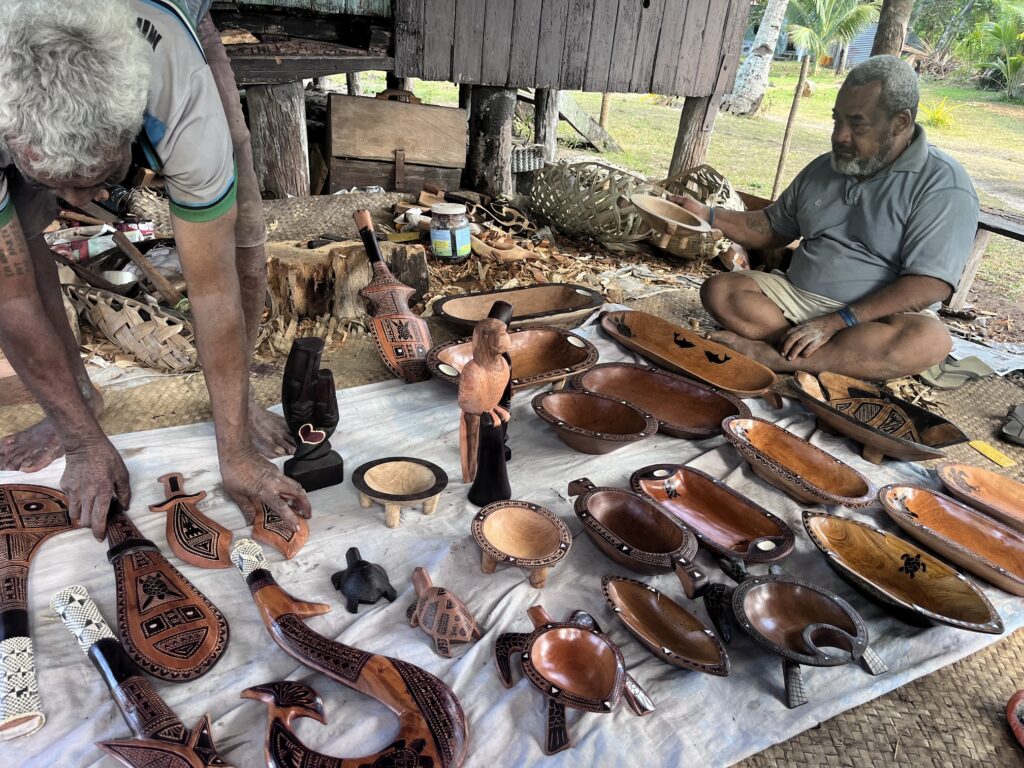
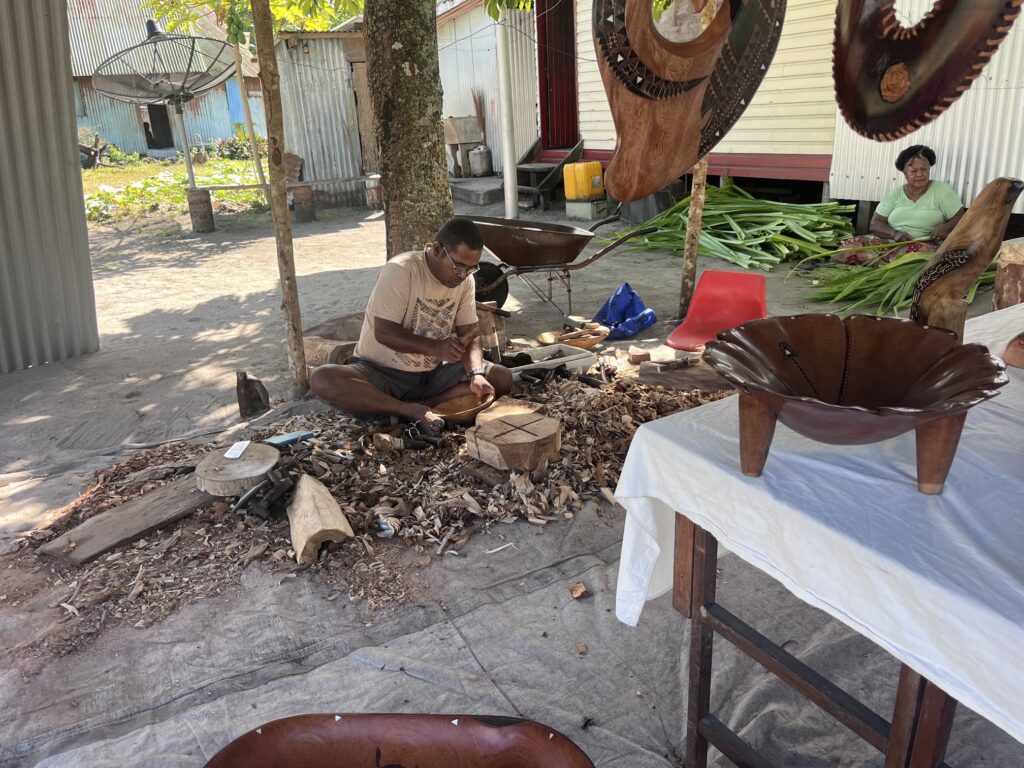
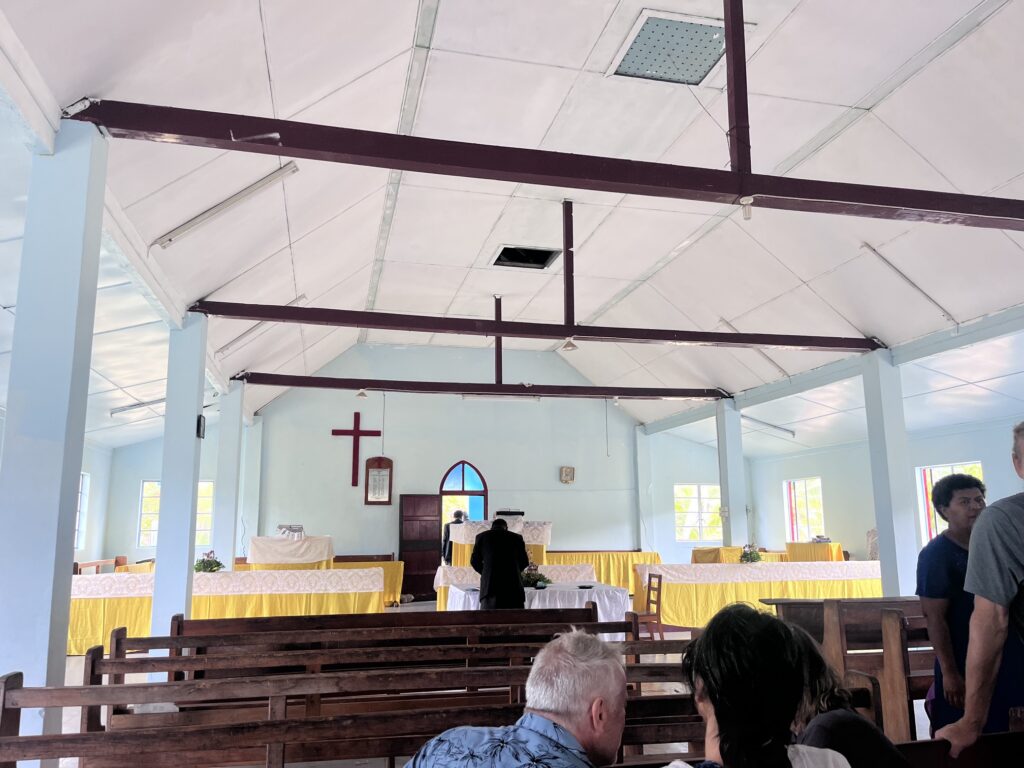
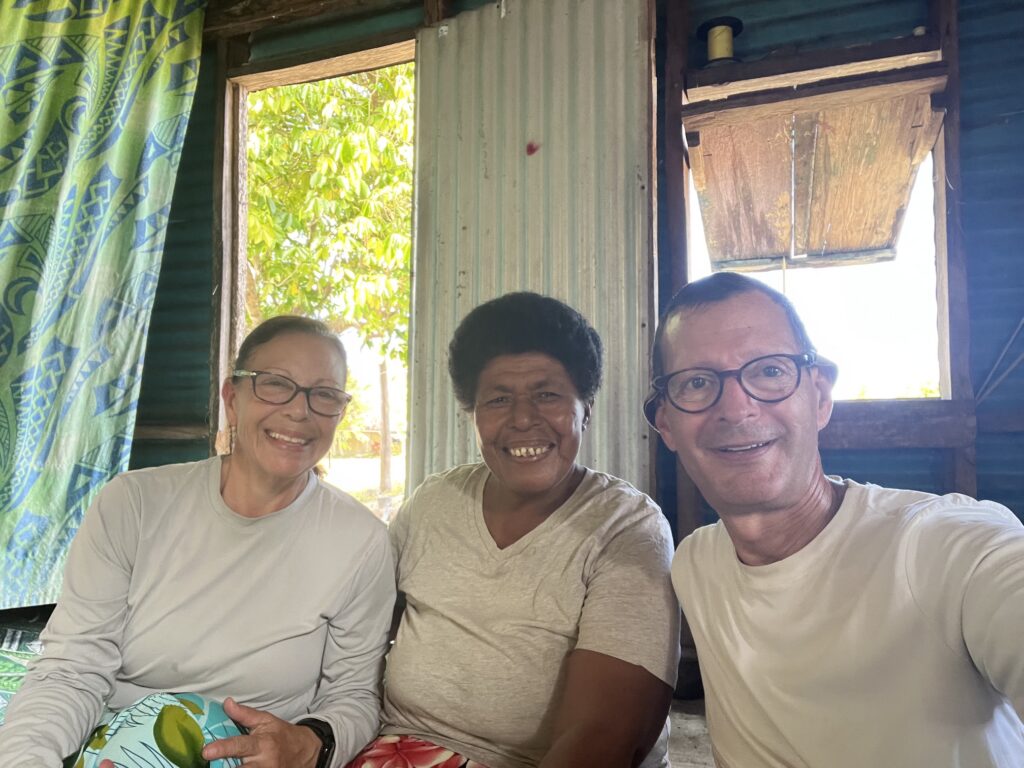
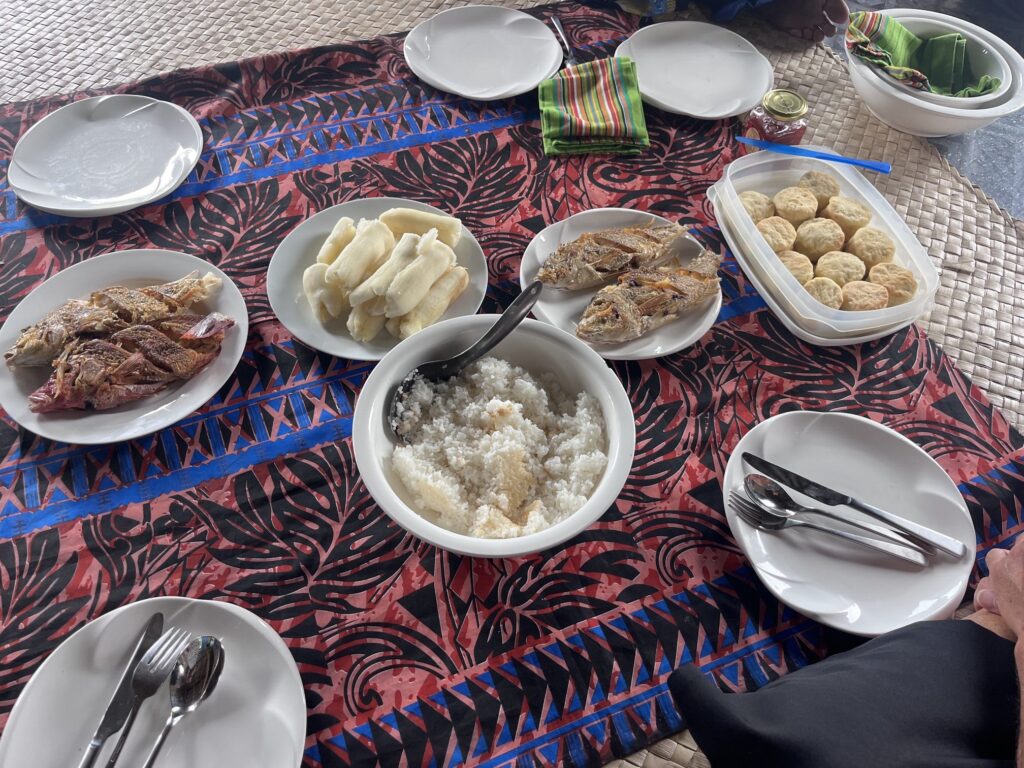
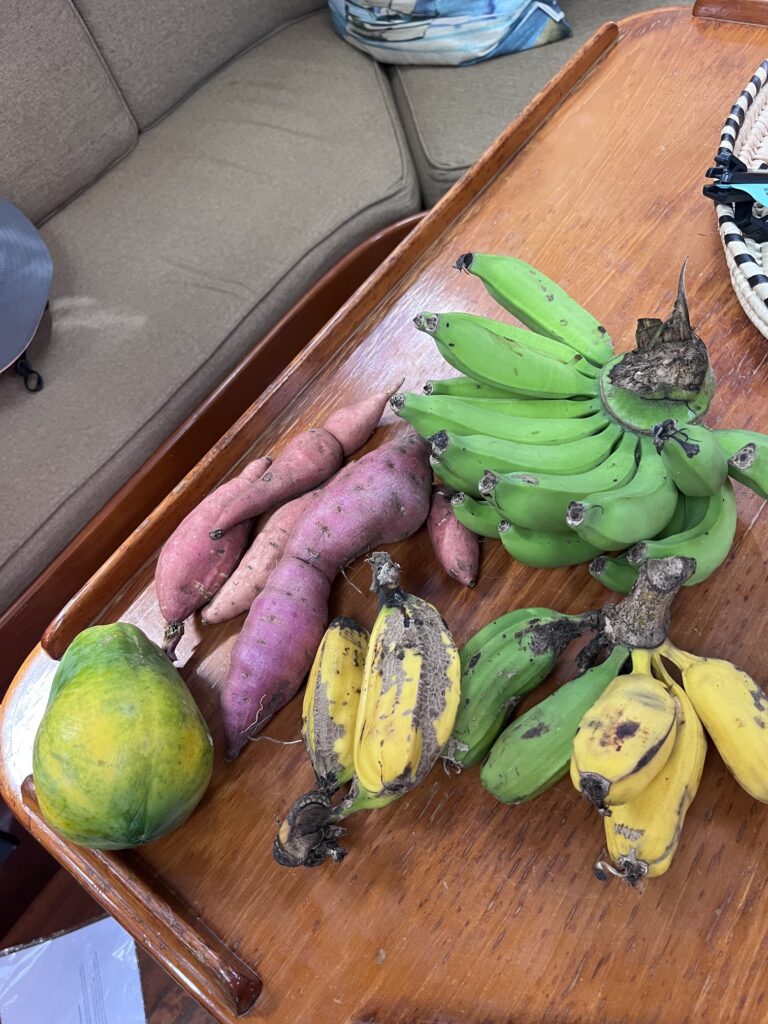
Lucy also invited us to church on Sunday and for lunch afterwards. We happily accepted the invitation! The lunch was fresh snapper that Lucy had caught herself the day before, cassava root, rice, and moringo fritters. Moringo is known as the “miracle tree” because it grows almost anywhere, stays in leaf all year long, is high in nutrients, and because all parts of the plant are edible. As we ate, I asked about life in the village. Lucy is a widow: she lost her husband last year. She has three children who all live in Suva on the big island. They rarely visit, so to see them, she has to travel there. The only way for villagers to come and go is via the supply ship, which means that if you leave, you are gone for at least a month. And the supply ship has a set route, so it doesn’t go directly back and forth to Suva-you are taking a cruise. On a cargo ship. There is a school with three teachers. Students start school at age five and then, at age 13, they have to leave the island to go to school in Suva, living away from home. There are three villages on the island, each with a church and the churches share a rotating team of pastors. The island has a nursing station for health care. The nurse is on the island full time and has a limited supply of basic medications. There is no imaging, surgery, specialty care, or hospital care. For anything beyond basic care, you have to go to the big island. That includes for delivering babies. Which involves the cargo ship. For medical emergencies, a helicopter can make the trip. But if you have a true emergency, like a heart attack, stroke, or serious injury, that’s not going to be much help because it will take at least 4 hours to get you to the big island. What about food? Well, the villagers grow and harvest most of their food: fish, octopus, coconuts, cassava, moringo, bananas, plantains, mangos, tomatoes, etc. For staples such as flour, sugar, oatmeal, rice, etc., that all comes from the big island on the supply ship. You put in your order and wait for it to show up-weeks later. What about other necessities like clothing, toiletries, etc., you ask? Well, you have to go to the big island and buy it: need new shoes? A new dress? Soap? Solar panel? Get on the boat for a month-long round trip. And, of course, to buy things, you need money. Except there is no money on the island. Villagers provide for themselves and share among themselves. There is literally no money. When they do have purchase things off-island, family members living on the big island make the purchases and ship it. In some ways, the life seems frightening. In other ways, liberating. It’s a lot to process. But one thing can be said for certain: the villagers are proud of their village, their culture, and their traditions. And they are happy. They must be doing something right!

Beautiful location. Hope to one day get to see it on my own boat, Lord willing. Great conclusion Robert. There can certainly be contentment and happiness in simplicity, as you experienced with those villagers. Probably an impossible goal for contemporary city people like us, but good inspiration for sure, makes one think how over complicated and over cluttered a life one might be living. Fair winds!!
(Tracking you on Predict Wind, in fact was hoping to read this week’s update after seeing your track on Friday evening 🙂 )
Thanks, Fabio!