

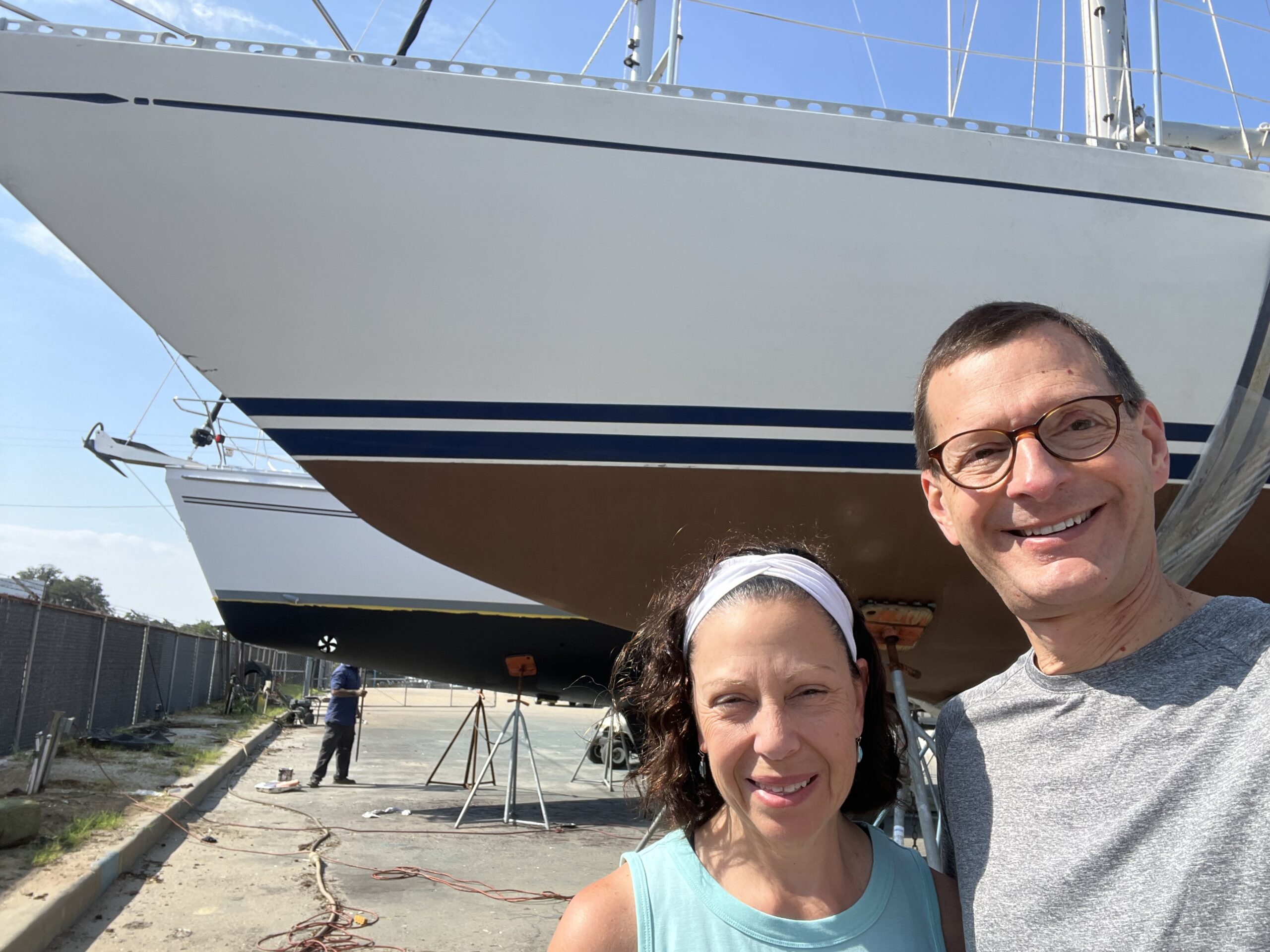
You Know What Makes a Sailboat Go? That’s Right-ELECTRICITY!
It seems counterintuitive, but, in fact, sailboats need electricity. They actually need quite a bit of electricity. For example:
- Refrigeration
- Flush toilets (they do make manual toilets but we went with electric flush)
- Water pumps (running water is convenient)
- Bilge pumps (not sinking would be nice)
- Autopilot (hand-steering across an ocean is NOT practical)
- Navigation instruments (we’d like to know where we are)
- Navigation lights (we’d like big ships to know where we are)
- Radar
- Cabin lights
- Charging for devices like phones and computers
- Watermaker (so we don’t dehydrate)
- Clothes washer (so we don’t stink)
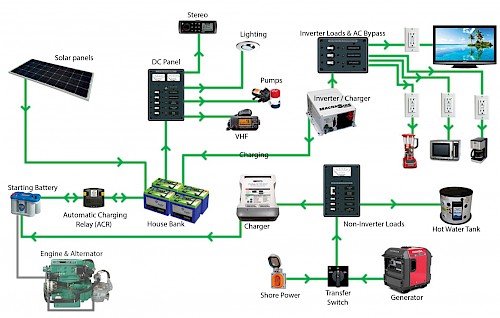
And that all requires electricity. There are two main challenges in powering a sailboat: making electricity and storing electricity. To make electricity, there are several options:
- Use a generator. This is a second engine, basically, that runs on diesel and makes electricity. We don’t have one of those and really don’t have any interest in installing one-one more thing to break (and enough stuff has broken already).
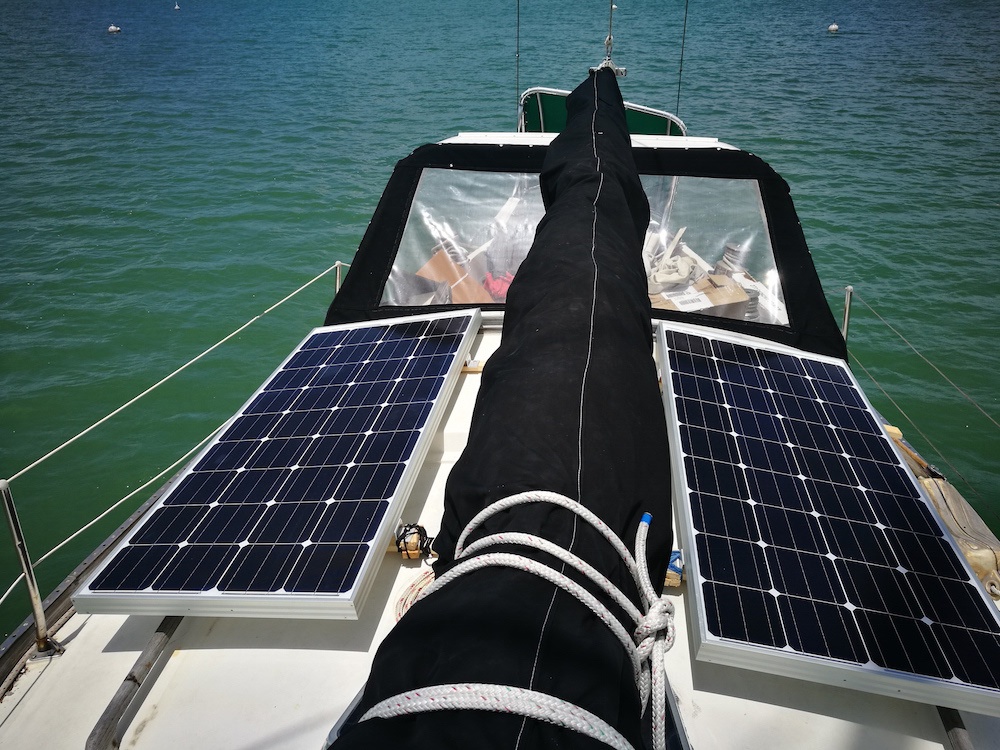
- Solar. This is a popular option and we’ll be mounting solar panels on Meraviglia. But it’s always a challenge to find the space.
- Wind. Wind generators are common (think windmill). We’re trying to avoid-they’re noisy.
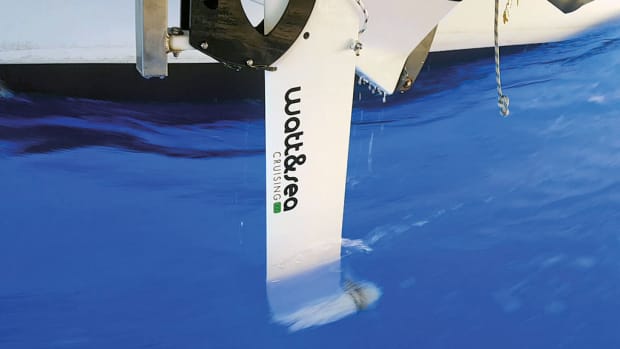
- Hydrogenerator. These are basically small propellers that hang off the bottom of the boat and generate power as the boat moves through the water. It sounds great, but they aren’t terribly efficient and do nothing unless the boat is moving.
- Use the engine. The engine has an alternator, which generates electricity. We’ll definitely use this method, but running the engine just to generate power is a drag, so we want to minimize this.
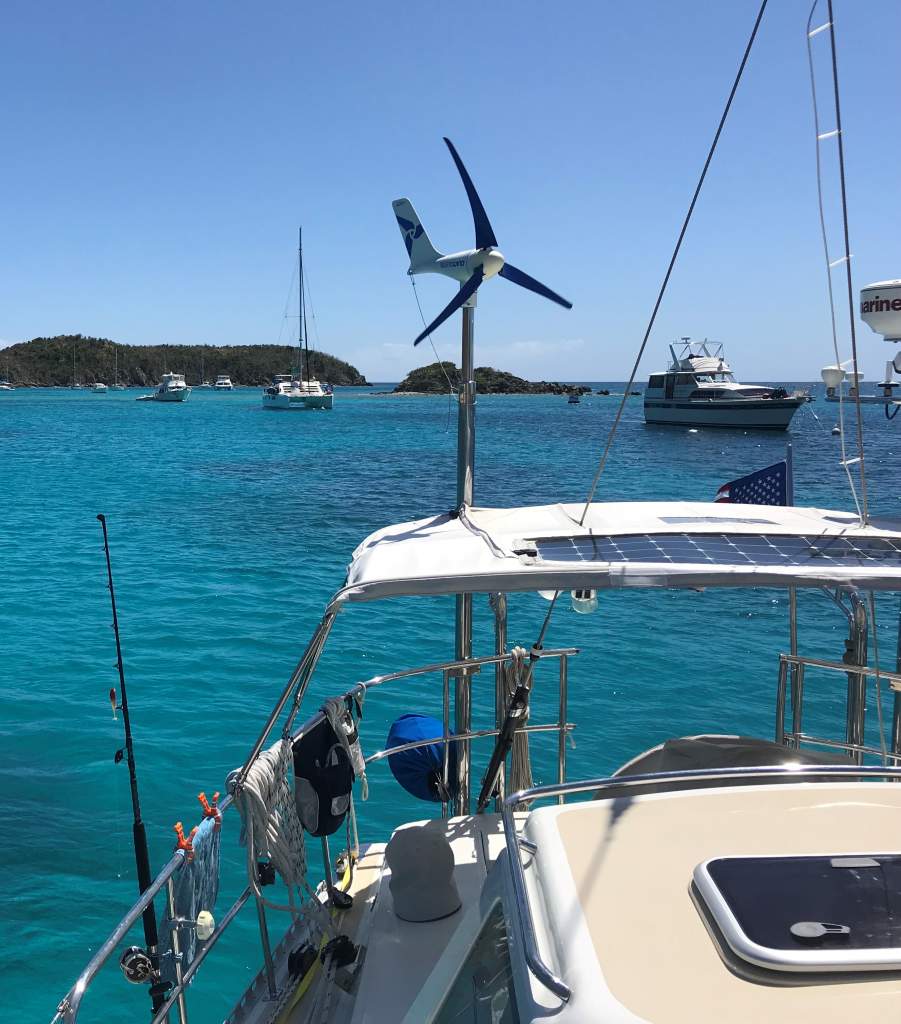
For storing electricity, we have batteries. Historically, boats used lead-acid batteries, just like cars. The problem is that they are heavy, have a limited lifespan, and cannot be discharged below about 70% of capacity without damaging them. Enter lithium. Lithium batteries have revolutionized the industry. They store more power with less weight and can be discharged down to about 30% of capacity. In addition, they last longer-a LOT longer. They are also, of course, much more expensive than lead-acid. However, over their life span, they are cheaper. The other problem is that they can catch fire. Remember a few years ago when that container ship hauling a load of luxury cars caught fire and sank in the ocean? It was the lithium batteries in the cars. We’d like to avoid that. Very much. So here’s our plan:
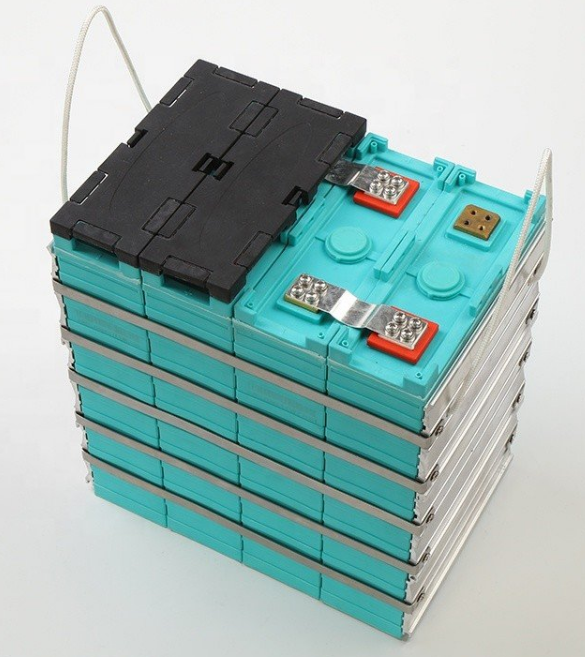
We’re going to install 800 Amp-hours of lithium battery capacity in the boat. Those batteries will be wired to a battery management system to prevent the dreaded “thermal runaway” (i.e. catching fire). They will be charged by a combination of solar and the engine alternator. We’re going to upgrade the engine alternator to a high-output alternator for quicker charging. The batteries will hopefully supply us with enough power. Reality may dictate that we need to add more batteries. Or we may need to add a wind generator for more production. We’ll see…


Very Interesting
You would solve a problem on power distribution better than I could!
I wonder if boat batteries have gone to Lithium polymer batteries which is supposed to not have the fire hazard the Lithium-Ion batteries have.
Not to my knowledge. We are installing Lithium Iron Phosphate, prismatic cell batteries from Blue Heron.
So much to consider and learn before departure. What an experience for you both! WeI love the updates!
Thanks! It’s a steep learning curve for sure!
Great write-up! We’re doing our lithium upgrade now too, among with some solar so we can take advantage of the federal tax credit. 😆
Wait! What? Tax Credit? Sweet! Didn’t even occur to me!